
29
мар
29
мар
Balancing Levels Setting levels is the most fundamental aspect of mixing music. Before the days of Pro Tools and endless editing, mix engineers were known as.
If you're serious about your bass sound, you need speakers that tell you what's going on below 100Hz, as well as acoustic treatment to prevent the room skewing that information. But even without these, you can improve your LF decision-making. Make a habit of judging the bass balance from a few different points in the room. The room's resonance modes will affect each location differently, so they're easier to factor out mentally. High-resolution spectrum analysis can also help you assess the sub-100Hz region. Some people suggest resting a finger on your woofer cone to gauge sub-bass levels from the drive excursions (as pictured), but I don't recommend it, as a bass note's woofer excursions are heavily dependent on its pitch and can often seem counter-intuitive.Most importantly, compare your mixes with commercial work you admire. Questions of bass frequency balance, dynamic range, mix level and effects use are highly era- and genre-dependent, and commercial tracks are your best guide to your audience's expectations, whether they be Radio 1's millions of listeners or the other member of the Chris De Burgh fan club!
Hp mediasmart software download for windows 7 free. Broadband hiss in bass recordings is usually easy to handle unless the arrangement is very sparse, because what isn't masked by other instruments can normally be low-pass filtered without any loss of tone. Where long note-decays reveal the noise unduly, try using automation to close down the low-pass filter further as the overall level reduces.
Although specialist plug-ins such as ToneBoosters TBHumRemover can zap mains hum in an instant, you can't just 'set and forget' on bass, otherwise you'll also remove any bass pitches that correspond to your local AC frequency! Again, automating the strength of the plug-in's processing offers a workaround.Low-frequency thuds (perhaps from the musician tapping their foot, jogging the mic stand, or hitting/slapping the instrument's body/strings) can't easily be removed with high-pass filters, and I favour patching over each note using copy/paste audio edits where possible. Where that's unfeasibly tedious, a multi-band dynamics processor swiftly limiting the sub-200Hz region can bring some improvement. Pick noise and fret buzz/squeak can be a pain too, and if low-pass filtering doesn't yield a solution, I normally turn to multi-band limiting again, this time over the upper half of the spectrum, hammering down the undesirable HF surges and spikes. Detailed fader automation can dip out isolated fret squeaks, but can also punch holes in your low end if used during sustained passages.Where a synth bass's upper spectrum is garnished with high-resonance filter sweeping, it can be difficult to maximise the bass's sense of power, warmth and textural thickness without the filter peaks slicing your ears to ribbons. Normal compression and EQ are no help whatsoever, because the filter peaks are always there and move their frequency the whole time.
Saturating the sound can help, by increasing the synth's general 'background' level of harmonics in relation to the filter peaks, but sometimes that's not enough. In extremis, I'll split the synth's upper frequency response into half a dozen bands using a multi-band dynamics engine, and set each band to skim the top off the itinerant filter peak whenever it's in range. This way, I've always got one of the compression bands ducking a small section of the frequency response, but the bands are all fairly narrow, so the cure usually sounds better than the disease. Check the polarity/phase relationships of mic and DI tracks. Cut back over-eager sub-100Hz harmonics with EQ, using Q values as high as possible. Treat further sub-100Hz inconsistencies with multi-band dynamics processing, or replace those frequencies with a sub-bass synth line.
Heavy compression isn't unusual, but take care with attack and release times to avoid unwanted distortion or lifeless dynamics. Compare the mix with relevant commercial records. Use your main monitors to focus on the bass's low end and warmth/mud frequencies, but switch to smaller speakers to assess mid-range audibility.
Mute the bass while you tweak the low mid-range balance of other instruments. To conserve mix headroom, try briefly ducking the bass 2-3dB in response to each kick hit. Boost at 1kHz for better mid-range cut-through, but add a low-pass filter if HF noises become obtrusive.
Parallel distortion can be even more effective, but be careful of phase cancellation. Limiting above 1kHz with multi-band dynamics can reduce distracting picking or fretting noises.
Multing allows the bass sound to adapt to dramatic arrangement changes, and can also combat any unwanted bass-ducking side-effects of your mix-bus compression. A touch of stereo chorus can connect the bass with wide-panned guitars, but be wary of sub-100Hz energy from the effects return. Use fader automation to draw attention to nice fills or licks, so the listener doesn't miss them. This is easier if listening to single-speaker mono playback. If level rides overload the mix with low end, automate a wide 1kHz EQ boost instead.
Check the polarity/phase relationships between separate mic and DI tracks. Cut back over-eager sub-100Hz harmonics with EQ, but keep Q values as high as possible. Tackle remaining sub-100Hz inconsistencies with multi-band dynamics processing, or patch up individual notes using copy/paste editing. Try not to push beyond 9dB of compression, because fader automation will sound more natural. Set the attack time low enough to usefully control the dynamic range, but high enough to leave some life in the note onsets.
Parallel compression can exaggerate note sustains more naturally, if necessary. Compare the mix with some relevant commercial records. Use your main monitors to focus on the bass's low end and warmth/mud frequencies, but switch to smaller speakers to assess mid-range audibility. Kick drum will naturally tend to dominate over acoustic bass in the bottom octave, so try high-pass filtering the latter from around 35Hz.
Mute the bass while you tweak the low mid-range balance of other instruments. Boost at 1kHz for better mid-range cut-through, but be mindful of HF noises or spill. Subtle parallel distortion can be effective too, if well matched for phase.
Limiting above 1kHz with multi-band dynamics can reduce string slap transients. The global send effects you use to blend together your drums and other instruments should also work fine for the bass. Use fader automation to draw attention to nice fills or licks so that the listener doesn't miss them. It's easier to do this while listening to single-speaker mono. If level rides overload the mix with low end, try automating a wide 1kHz EQ boost instead. If there are multiple synth layers, avoid LF phase-cancellation difficulties by choosing only one layer to carry the sub-100Hz energy.
High-pass filter the rest. Check stereo synth patches for mono compatibility at the low end. Adjust MIDI/synth programming to tackle dynamics concerns. If sub-100Hz inconsistencies remain, address them with multi-band dynamics processing, or replace the frequencies with a sub-bass synth. For layered synth parts, solo all layers together and listen through the whole track carefully.
If you discover any LF loss from phase-cancellation, bounce the MIDI parts as audio and adjust the inter-layer timing for offending notes. Compare the mix with relevant commercial records.

Use your main monitors to focus on the bass's low end and warmth/mud frequencies, but switch to smaller speakers to assess mid-range audibility. If your bass hogs the low end, your kick may need more energy than you expect at 100-200Hz. To conserve mix headroom, try briefly ducking the bass 2-3dB in response to each kick hit.
Where upper-spectrum filter sweeps are too abrasive, saturation can make them less obvious. Multi-band limiting can go further, but works best with lots of narrow bands. Use fader automation to draw attention to nice fills or licks, so that the listener doesn't miss them. If possible, do this while listening to single-speaker mono playback. If you make sure that bass instruments are tuned before recording, bass pitching problems aren't usually a huge issue at mixdown. That's partly because synths and (to a certain extent) fretted basses have pre-quantised pitches, but also because tuning is a relative judgement: even an out-of-tune bass can sound fine if the other parts have been recorded to fit around it!If you do detect some sour notes at the mixing stage, the monophonic nature of most bass parts usually makes it easy to correct them adequately, even with a DAW's built-in pitch-processing. The only time I've bothered to get something specialised like Auto-Tune or Melodyne involved is where the performer of a fretless electric or acoustic upright seems to have been on the bevvies!Bear in mind that your pitch-processing judgements can be biased according to the way you listen.
For example, if a bass note's harmonics are slightly out of tune with its fundamental and you adjust the tuning while working on headphones, you might end up with something that sounds more out of tune on a full-range system. Listening level also has an effect on pitch perception, such that you may perceive bass instruments to be shifting subtly flatter the louder you listen.Timing is usually a more pressing concern with home-brew bass tracks. The bass contains so much of the audio power in a track, and is often mixed so loud in modern styles, so it constitutes a powerful driver of the song's groove. It's thus rarely a good idea for its timing to disagree with other important rhythmic elements in the track. It's amazing how much tighter it can make a mix feel if you just ensure that the bass and kick drum are fairly closely aligned, for instance.
This doesn't mean just lining up the waveforms by eye (which can get you to a good 'starter' position for each note), as things that 'look' in time can sound out of time. There's also a good chance that the groove might sound better with the bass notes slightly trailing or anticipating the drum hits — so, as with all things mix-related, your ears should always be the final arbiters. Don't just concentrate on note onsets, either, as the end-point of a bass note can also make a big difference to the groove.I've never felt the need for special software for doing bass edits, because crossfaded audio edits always seem fine for the job. Periodically I've tried tangling with time-stretching for bass timing corrections, but I've always ended up feeling that digital chorusing and 'gargling' artifacts induced in the mid-range have been detrimental to the mix tone, so have always reverted back to using simple edits.Most of the time, in the case of bass edits, you can just snip in a gap between bass notes or at a point just before one of the kick-drum beats, and no-one will notice a thing if you apply a few milliseconds of crossfading.
On occasion, though, you need to edit in a more exposed location in the middle of a bass note, in which case the trick is to try to match the waveform as closely as possible across the edit point, because any big discontinuity will result in a click. But won't a crossfade just smooth that over? Nope, it'll turn it into a thud, which may well interfere with your rhythmic groove even if it isn't clearly audible in its own right. Even when you've matched the waveform across the edit, though, it's still wise to put in a short crossfade (over a single waveform cycle or so), but try to select an 'equal gain' crossfade if you can, rather than an 'equal power' one, or else you'll get an unwanted level bump at its centre.
When, we often think of EQ, compression, reverb, delay, distortion; this plugin and that plugin, this technique and that technique.These are all important, particularly EQ and compression. They’re used to fix problems in the mix, and enhance it. But they’re useless if your mix isn’t balanced.It’s like adding delicious icing to a disgusting cake. You might cover up some of the bad taste, but really all you’re doing is wasting the icing. The same goes with music, putting effort into processing tracks that aren’t at the right volume is a waste of time.Nicholas Di Lorenzo from puts it nicely.
What is a Fader-Only Mix?The mixdown process is often pictured as one complete task. As something you just do where there’s no set method or subset of tasks.I believe that’s a bad way to look at it, and many mixing engineers would agree with me. In my mind, the mixdown process can be summed up into a few key sections:.
Preparation. Fader-only mix. EQ and dynamic processing. Enhancement effects.Now, some engineers don’t split up the mixing process like this. Download driver komputer hp laserjet 1020 for mac. If you watched them mix a track, it would look like they’re doing everything all at once, because they are.This works for a select few who have mastered their craft and can work completely intuitively.
For the bedroom producer, however, looking at the mixdown process as a collection of different processes instead of a whole will not only make mixing easier and quicker, it will result in a better mix.So what is a fader-only mix? It’s the process that comes after preparation. A fader-only mix is where you only touch your faders. No compression, no EQ, just faders. Why is a Fader-Only Mix Important?There are several reasons a fader-only mix is important.
The first is that it helps you focus on what’s most important in the mix. In the case of a mixdown, this is the overall balance of the tracks. You’re not spending 30 minutes here or there on something trivial.The second reason a fader-only mix is important is because it’s a HUGE part of the mixdown process. In fact, top mixing engineers argue that you can get about 80% of the way there with just your faders. Going from 80% to 100% is a lot easier than going from 0% to 100%.The third and final reason is that it provides grounds for the use of effects such as EQ and compression. Once you’ve got a well-balanced fader-only mix, adding EQ and compression will be easier for two reasons:. The levels are set right, so you’ll notice how processing affects the track in relation to the rest of the mix much easier. You’ll know where to add EQ and compression instead of just slapping it on and experimenting (see Take Notes under Tips & Tricks).Step-by-Step: The Process in ActionWhile a fader-only mix is inherently simple (you’re just moving faders until your mix sounds good), I do recommend you read the steps below. There are a few things to keep in mind when preparing for a fader-only mix and doing it.
PreparationYou should always prepare for a mixdown, and preparing for a fader-only mix means preparing for the full mixing process.It starts with coloring, naming, and organizing your tracks, so instead of having a project that looks like this:You have something like this:You want to work effectively and efficiently, so having your tracks colored and named is essential.Another part of preparation that’s optional is precautionary high-pass filtering. By this, I mean high-passing below the point where it starts to affect the sound to get rid of any artifacts or low rumbles.This isn’t a corrective form of high-passing, you’re not fixing any clashes, you’re just getting rid of the unnecessary. It’s a good idea to avoid using steep filter slopes.A good approach to this kind of filtering, one that’s used by engineer, is to carefully raise the frequency until you hear a change in the sound then lower it by 15%. Gain StagingI don’t want to write an in-post essay on gain staging and the numerous reasons why it’s used, if you want to learn more about it, What I will do is explain how it’s relevant in electronic music production and why you should consider using it.Because most of us aren’t tracking live audio and recording instruments, gain staging is of less importance. However, there’s still a good reason to use gain staging in the mixdown process, even as an electronic music producer.In all DAWs, faders have their best resolution around 0dB, also known as the unity gain position.
You can make more precise level changes near this unity gain position. The lower the fader is, the nearer it is to the bottom, the less precise adjustments you can make.As such, it’s good idea to optimize the incoming signal so each track is as close to the unity gain position as possible. There are multiple ways to do this, but the easiest way is to use a utility/gain plugin to adjust the level (for example, you might have a fader sitting at -36dB, so you add a utility plugin and pull the volume down -30dB so you can move the fader up to around -6dB, closer to the unity gain position).Note: doing this isn’t essential, but it improves precision, which a fader-only mix benefits from. 3. Adjusting the FadersNow that the boring stuff is out the way, it’s time to get to work.Many people think that you should perform a fader-only mix as fast as possible. The fader-only mix is the most important part of the mixdown process, so it makes sense to give it time and attention.The first thing you need to do is pull all your faders down.
Unless you’re a veteran mixing engineer (in which case, why the hell are you reading this?) it’s unlikely that you can mix well with all faders up. Pull them all the way down so that nothing can be heard.Note: There’s no need to pull the faders down on busses and sends, as these don’t generate audio by themselves.Once this is done, it’s time to find the most important section of your track and loop it. For most, this will be the drop or chorus.You’re ready to mix. Start with a TargetIt’s easy to get carried away when mixing and sub-consciously move faders up until your master is clipping. To prevent this from happening, I recommend setting a target level for your mix. Most people like to leave about 6dB of headroom, meaning the master channel shouldn’t reach above -6dB consistently (the odd peak is fine).Having a target also makes it easier for you to set the volume of the first track. You might move up the fader on your kick channel to -9dB, which offers an extra 3dB of headroom for other elements, then you can mix everything around that.
Work in Order of ImportanceWhen mixing, you should work in order of importance.This means making sure the balance between your kick and bassline is decent before adjusting the fader for your crash cymbal channel. If you’re making dance music, then 9 times out of 10 you should start with your kick drum and then moving onto your bassline. If you’ve got vocals in your track, then consider starting with them instead.Working this way is important for several reasons, but the most obvious one is that mixing is easier when you have less going on. It’s easy to work out the right level for your bassline in relation to your kick, because the kick is the only other element playing. Later on in the process when you’ve got 20-30 tracks playing, however, trying to fit a new element in your mix with just a fader is much more difficult. Narrowing DownMost people are very liberal when setting fader levels. They set them at a level that sounds okay, and then move on to the next one.This is lazy.You should start by making fader movements that are significant, and then narrow them down.
For example, you move a fader up 3dB and find it’s too loud, so you move it back down 2dB and it sounds alright. Then you move it up by 1dB.
Does it sound better? If not, move it down by.5dB, and so on.Doing this well requires you to listen closely.
If you’ve been producing all day and have ear fatigue, you can expect your levels to be way off. A fader-only mix is best done with fresh ears. Don’t Rush itIt’s more fun to add compression and EQ than it is to do a fader-only mix. You’ll be tempted to rush so you can move on to the next stage and start adding those effects. But by doing this you’re just going to end up with a mix that hasn’t reached its full potential.Don’t rush the fader-only mix. If you feel you haven’t put in your best effort, then take a break and make changes, or start from scratch. Yes, it can be boring and frustrating, but it’s worth it.
Tips and Tricks. If you’re struggling to set the right level, move your fader up so that it’s too loud, then bring it down slowly until you hit the sweet spot.
Use reference tracks, but don’t rely on them. Cross-reference on headphones frequently. Take notes (e.g., if you find you have to keep moving a fader around, it probably needs compression.
Note this down for later on when you add compression). Don’t be afraid to remove tracks from the project if they aren’t contributing enough to the mix.ConclusionNow you’ve read this you know how beneficial and important a fader-only mix is. It can be uncomfortable at first, especially if you’re used to doing everything at once, but I guarantee it will enable you to work faster and cause your mixes to sound much better.If you have any questions about this article, leave them below and I’ll get back to you.
Balancing Levels Setting levels is the most fundamental aspect of mixing music. Before the days of Pro Tools and endless editing, mix engineers were known as.
If you\'re serious about your bass sound, you need speakers that tell you what\'s going on below 100Hz, as well as acoustic treatment to prevent the room skewing that information. But even without these, you can improve your LF decision-making. Make a habit of judging the bass balance from a few different points in the room. The room\'s resonance modes will affect each location differently, so they\'re easier to factor out mentally. High-resolution spectrum analysis can also help you assess the sub-100Hz region. Some people suggest resting a finger on your woofer cone to gauge sub-bass levels from the drive excursions (as pictured), but I don\'t recommend it, as a bass note\'s woofer excursions are heavily dependent on its pitch and can often seem counter-intuitive.Most importantly, compare your mixes with commercial work you admire. Questions of bass frequency balance, dynamic range, mix level and effects use are highly era- and genre-dependent, and commercial tracks are your best guide to your audience\'s expectations, whether they be Radio 1\'s millions of listeners or the other member of the Chris De Burgh fan club!
Hp mediasmart software download for windows 7 free. Broadband hiss in bass recordings is usually easy to handle unless the arrangement is very sparse, because what isn\'t masked by other instruments can normally be low-pass filtered without any loss of tone. Where long note-decays reveal the noise unduly, try using automation to close down the low-pass filter further as the overall level reduces.
Although specialist plug-ins such as ToneBoosters TBHumRemover can zap mains hum in an instant, you can\'t just \'set and forget\' on bass, otherwise you\'ll also remove any bass pitches that correspond to your local AC frequency! Again, automating the strength of the plug-in\'s processing offers a workaround.Low-frequency thuds (perhaps from the musician tapping their foot, jogging the mic stand, or hitting/slapping the instrument\'s body/strings) can\'t easily be removed with high-pass filters, and I favour patching over each note using copy/paste audio edits where possible. Where that\'s unfeasibly tedious, a multi-band dynamics processor swiftly limiting the sub-200Hz region can bring some improvement. Pick noise and fret buzz/squeak can be a pain too, and if low-pass filtering doesn\'t yield a solution, I normally turn to multi-band limiting again, this time over the upper half of the spectrum, hammering down the undesirable HF surges and spikes. Detailed fader automation can dip out isolated fret squeaks, but can also punch holes in your low end if used during sustained passages.Where a synth bass\'s upper spectrum is garnished with high-resonance filter sweeping, it can be difficult to maximise the bass\'s sense of power, warmth and textural thickness without the filter peaks slicing your ears to ribbons. Normal compression and EQ are no help whatsoever, because the filter peaks are always there and move their frequency the whole time.
Saturating the sound can help, by increasing the synth\'s general \'background\' level of harmonics in relation to the filter peaks, but sometimes that\'s not enough. In extremis, I\'ll split the synth\'s upper frequency response into half a dozen bands using a multi-band dynamics engine, and set each band to skim the top off the itinerant filter peak whenever it\'s in range. This way, I\'ve always got one of the compression bands ducking a small section of the frequency response, but the bands are all fairly narrow, so the cure usually sounds better than the disease. Check the polarity/phase relationships of mic and DI tracks. Cut back over-eager sub-100Hz harmonics with EQ, using Q values as high as possible. Treat further sub-100Hz inconsistencies with multi-band dynamics processing, or replace those frequencies with a sub-bass synth line.
Heavy compression isn\'t unusual, but take care with attack and release times to avoid unwanted distortion or lifeless dynamics. Compare the mix with relevant commercial records. Use your main monitors to focus on the bass\'s low end and warmth/mud frequencies, but switch to smaller speakers to assess mid-range audibility.
Mute the bass while you tweak the low mid-range balance of other instruments. To conserve mix headroom, try briefly ducking the bass 2-3dB in response to each kick hit. Boost at 1kHz for better mid-range cut-through, but add a low-pass filter if HF noises become obtrusive.
Parallel distortion can be even more effective, but be careful of phase cancellation. Limiting above 1kHz with multi-band dynamics can reduce distracting picking or fretting noises.
Multing allows the bass sound to adapt to dramatic arrangement changes, and can also combat any unwanted bass-ducking side-effects of your mix-bus compression. A touch of stereo chorus can connect the bass with wide-panned guitars, but be wary of sub-100Hz energy from the effects return. Use fader automation to draw attention to nice fills or licks, so the listener doesn\'t miss them. This is easier if listening to single-speaker mono playback. If level rides overload the mix with low end, automate a wide 1kHz EQ boost instead.
Check the polarity/phase relationships between separate mic and DI tracks. Cut back over-eager sub-100Hz harmonics with EQ, but keep Q values as high as possible. Tackle remaining sub-100Hz inconsistencies with multi-band dynamics processing, or patch up individual notes using copy/paste editing. Try not to push beyond 9dB of compression, because fader automation will sound more natural. Set the attack time low enough to usefully control the dynamic range, but high enough to leave some life in the note onsets.
Parallel compression can exaggerate note sustains more naturally, if necessary. Compare the mix with some relevant commercial records. Use your main monitors to focus on the bass\'s low end and warmth/mud frequencies, but switch to smaller speakers to assess mid-range audibility. Kick drum will naturally tend to dominate over acoustic bass in the bottom octave, so try high-pass filtering the latter from around 35Hz.
Mute the bass while you tweak the low mid-range balance of other instruments. Boost at 1kHz for better mid-range cut-through, but be mindful of HF noises or spill. Subtle parallel distortion can be effective too, if well matched for phase.
Limiting above 1kHz with multi-band dynamics can reduce string slap transients. The global send effects you use to blend together your drums and other instruments should also work fine for the bass. Use fader automation to draw attention to nice fills or licks so that the listener doesn\'t miss them. It\'s easier to do this while listening to single-speaker mono. If level rides overload the mix with low end, try automating a wide 1kHz EQ boost instead. If there are multiple synth layers, avoid LF phase-cancellation difficulties by choosing only one layer to carry the sub-100Hz energy.
High-pass filter the rest. Check stereo synth patches for mono compatibility at the low end. Adjust MIDI/synth programming to tackle dynamics concerns. If sub-100Hz inconsistencies remain, address them with multi-band dynamics processing, or replace the frequencies with a sub-bass synth. For layered synth parts, solo all layers together and listen through the whole track carefully.
If you discover any LF loss from phase-cancellation, bounce the MIDI parts as audio and adjust the inter-layer timing for offending notes. Compare the mix with relevant commercial records.

Use your main monitors to focus on the bass\'s low end and warmth/mud frequencies, but switch to smaller speakers to assess mid-range audibility. If your bass hogs the low end, your kick may need more energy than you expect at 100-200Hz. To conserve mix headroom, try briefly ducking the bass 2-3dB in response to each kick hit.
Where upper-spectrum filter sweeps are too abrasive, saturation can make them less obvious. Multi-band limiting can go further, but works best with lots of narrow bands. Use fader automation to draw attention to nice fills or licks, so that the listener doesn\'t miss them. If possible, do this while listening to single-speaker mono playback. If you make sure that bass instruments are tuned before recording, bass pitching problems aren\'t usually a huge issue at mixdown. That\'s partly because synths and (to a certain extent) fretted basses have pre-quantised pitches, but also because tuning is a relative judgement: even an out-of-tune bass can sound fine if the other parts have been recorded to fit around it!If you do detect some sour notes at the mixing stage, the monophonic nature of most bass parts usually makes it easy to correct them adequately, even with a DAW\'s built-in pitch-processing. The only time I\'ve bothered to get something specialised like Auto-Tune or Melodyne involved is where the performer of a fretless electric or acoustic upright seems to have been on the bevvies!Bear in mind that your pitch-processing judgements can be biased according to the way you listen.
For example, if a bass note\'s harmonics are slightly out of tune with its fundamental and you adjust the tuning while working on headphones, you might end up with something that sounds more out of tune on a full-range system. Listening level also has an effect on pitch perception, such that you may perceive bass instruments to be shifting subtly flatter the louder you listen.Timing is usually a more pressing concern with home-brew bass tracks. The bass contains so much of the audio power in a track, and is often mixed so loud in modern styles, so it constitutes a powerful driver of the song\'s groove. It\'s thus rarely a good idea for its timing to disagree with other important rhythmic elements in the track. It\'s amazing how much tighter it can make a mix feel if you just ensure that the bass and kick drum are fairly closely aligned, for instance.
This doesn\'t mean just lining up the waveforms by eye (which can get you to a good \'starter\' position for each note), as things that \'look\' in time can sound out of time. There\'s also a good chance that the groove might sound better with the bass notes slightly trailing or anticipating the drum hits — so, as with all things mix-related, your ears should always be the final arbiters. Don\'t just concentrate on note onsets, either, as the end-point of a bass note can also make a big difference to the groove.I\'ve never felt the need for special software for doing bass edits, because crossfaded audio edits always seem fine for the job. Periodically I\'ve tried tangling with time-stretching for bass timing corrections, but I\'ve always ended up feeling that digital chorusing and \'gargling\' artifacts induced in the mid-range have been detrimental to the mix tone, so have always reverted back to using simple edits.Most of the time, in the case of bass edits, you can just snip in a gap between bass notes or at a point just before one of the kick-drum beats, and no-one will notice a thing if you apply a few milliseconds of crossfading.
On occasion, though, you need to edit in a more exposed location in the middle of a bass note, in which case the trick is to try to match the waveform as closely as possible across the edit point, because any big discontinuity will result in a click. But won\'t a crossfade just smooth that over? Nope, it\'ll turn it into a thud, which may well interfere with your rhythmic groove even if it isn\'t clearly audible in its own right. Even when you\'ve matched the waveform across the edit, though, it\'s still wise to put in a short crossfade (over a single waveform cycle or so), but try to select an \'equal gain\' crossfade if you can, rather than an \'equal power\' one, or else you\'ll get an unwanted level bump at its centre.
When, we often think of EQ, compression, reverb, delay, distortion; this plugin and that plugin, this technique and that technique.These are all important, particularly EQ and compression. They’re used to fix problems in the mix, and enhance it. But they’re useless if your mix isn’t balanced.It’s like adding delicious icing to a disgusting cake. You might cover up some of the bad taste, but really all you’re doing is wasting the icing. The same goes with music, putting effort into processing tracks that aren’t at the right volume is a waste of time.Nicholas Di Lorenzo from puts it nicely.
What is a Fader-Only Mix?The mixdown process is often pictured as one complete task. As something you just do where there’s no set method or subset of tasks.I believe that’s a bad way to look at it, and many mixing engineers would agree with me. In my mind, the mixdown process can be summed up into a few key sections:.
Preparation. Fader-only mix. EQ and dynamic processing. Enhancement effects.Now, some engineers don’t split up the mixing process like this. Download driver komputer hp laserjet 1020 for mac. If you watched them mix a track, it would look like they’re doing everything all at once, because they are.This works for a select few who have mastered their craft and can work completely intuitively.
For the bedroom producer, however, looking at the mixdown process as a collection of different processes instead of a whole will not only make mixing easier and quicker, it will result in a better mix.So what is a fader-only mix? It’s the process that comes after preparation. A fader-only mix is where you only touch your faders. No compression, no EQ, just faders. Why is a Fader-Only Mix Important?There are several reasons a fader-only mix is important.
The first is that it helps you focus on what’s most important in the mix. In the case of a mixdown, this is the overall balance of the tracks. You’re not spending 30 minutes here or there on something trivial.The second reason a fader-only mix is important is because it’s a HUGE part of the mixdown process. In fact, top mixing engineers argue that you can get about 80% of the way there with just your faders. Going from 80% to 100% is a lot easier than going from 0% to 100%.The third and final reason is that it provides grounds for the use of effects such as EQ and compression. Once you’ve got a well-balanced fader-only mix, adding EQ and compression will be easier for two reasons:. The levels are set right, so you’ll notice how processing affects the track in relation to the rest of the mix much easier. You’ll know where to add EQ and compression instead of just slapping it on and experimenting (see Take Notes under Tips & Tricks).Step-by-Step: The Process in ActionWhile a fader-only mix is inherently simple (you’re just moving faders until your mix sounds good), I do recommend you read the steps below. There are a few things to keep in mind when preparing for a fader-only mix and doing it.
PreparationYou should always prepare for a mixdown, and preparing for a fader-only mix means preparing for the full mixing process.It starts with coloring, naming, and organizing your tracks, so instead of having a project that looks like this:You have something like this:You want to work effectively and efficiently, so having your tracks colored and named is essential.Another part of preparation that’s optional is precautionary high-pass filtering. By this, I mean high-passing below the point where it starts to affect the sound to get rid of any artifacts or low rumbles.This isn’t a corrective form of high-passing, you’re not fixing any clashes, you’re just getting rid of the unnecessary. It’s a good idea to avoid using steep filter slopes.A good approach to this kind of filtering, one that’s used by engineer, is to carefully raise the frequency until you hear a change in the sound then lower it by 15%. Gain StagingI don’t want to write an in-post essay on gain staging and the numerous reasons why it’s used, if you want to learn more about it, What I will do is explain how it’s relevant in electronic music production and why you should consider using it.Because most of us aren’t tracking live audio and recording instruments, gain staging is of less importance. However, there’s still a good reason to use gain staging in the mixdown process, even as an electronic music producer.In all DAWs, faders have their best resolution around 0dB, also known as the unity gain position.
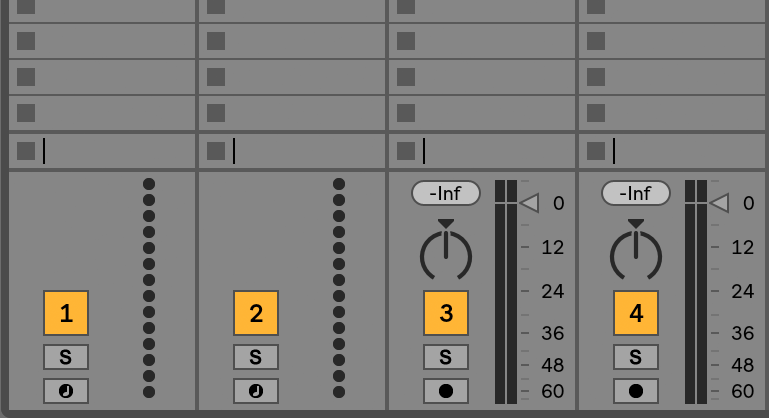
You can make more precise level changes near this unity gain position. The lower the fader is, the nearer it is to the bottom, the less precise adjustments you can make.As such, it’s good idea to optimize the incoming signal so each track is as close to the unity gain position as possible. There are multiple ways to do this, but the easiest way is to use a utility/gain plugin to adjust the level (for example, you might have a fader sitting at -36dB, so you add a utility plugin and pull the volume down -30dB so you can move the fader up to around -6dB, closer to the unity gain position).Note: doing this isn’t essential, but it improves precision, which a fader-only mix benefits from. 3. Adjusting the FadersNow that the boring stuff is out the way, it’s time to get to work.Many people think that you should perform a fader-only mix as fast as possible. The fader-only mix is the most important part of the mixdown process, so it makes sense to give it time and attention.The first thing you need to do is pull all your faders down.
Unless you’re a veteran mixing engineer (in which case, why the hell are you reading this?) it’s unlikely that you can mix well with all faders up. Pull them all the way down so that nothing can be heard.Note: There’s no need to pull the faders down on busses and sends, as these don’t generate audio by themselves.Once this is done, it’s time to find the most important section of your track and loop it. For most, this will be the drop or chorus.You’re ready to mix. Start with a TargetIt’s easy to get carried away when mixing and sub-consciously move faders up until your master is clipping. To prevent this from happening, I recommend setting a target level for your mix. Most people like to leave about 6dB of headroom, meaning the master channel shouldn’t reach above -6dB consistently (the odd peak is fine).Having a target also makes it easier for you to set the volume of the first track. You might move up the fader on your kick channel to -9dB, which offers an extra 3dB of headroom for other elements, then you can mix everything around that.

Work in Order of ImportanceWhen mixing, you should work in order of importance.This means making sure the balance between your kick and bassline is decent before adjusting the fader for your crash cymbal channel. If you’re making dance music, then 9 times out of 10 you should start with your kick drum and then moving onto your bassline. If you’ve got vocals in your track, then consider starting with them instead.Working this way is important for several reasons, but the most obvious one is that mixing is easier when you have less going on. It’s easy to work out the right level for your bassline in relation to your kick, because the kick is the only other element playing. Later on in the process when you’ve got 20-30 tracks playing, however, trying to fit a new element in your mix with just a fader is much more difficult. Narrowing DownMost people are very liberal when setting fader levels. They set them at a level that sounds okay, and then move on to the next one.This is lazy.You should start by making fader movements that are significant, and then narrow them down.
For example, you move a fader up 3dB and find it’s too loud, so you move it back down 2dB and it sounds alright. Then you move it up by 1dB.
Does it sound better? If not, move it down by.5dB, and so on.Doing this well requires you to listen closely.
If you’ve been producing all day and have ear fatigue, you can expect your levels to be way off. A fader-only mix is best done with fresh ears. Don’t Rush itIt’s more fun to add compression and EQ than it is to do a fader-only mix. You’ll be tempted to rush so you can move on to the next stage and start adding those effects. But by doing this you’re just going to end up with a mix that hasn’t reached its full potential.Don’t rush the fader-only mix. If you feel you haven’t put in your best effort, then take a break and make changes, or start from scratch. Yes, it can be boring and frustrating, but it’s worth it.
Tips and Tricks. If you’re struggling to set the right level, move your fader up so that it’s too loud, then bring it down slowly until you hit the sweet spot.
Use reference tracks, but don’t rely on them. Cross-reference on headphones frequently. Take notes (e.g., if you find you have to keep moving a fader around, it probably needs compression.
Note this down for later on when you add compression). Don’t be afraid to remove tracks from the project if they aren’t contributing enough to the mix.ConclusionNow you’ve read this you know how beneficial and important a fader-only mix is. It can be uncomfortable at first, especially if you’re used to doing everything at once, but I guarantee it will enable you to work faster and cause your mixes to sound much better.If you have any questions about this article, leave them below and I’ll get back to you.
...'>Setting Levels In A Mix(29.03.2020)Balancing Levels Setting levels is the most fundamental aspect of mixing music. Before the days of Pro Tools and endless editing, mix engineers were known as.
If you\'re serious about your bass sound, you need speakers that tell you what\'s going on below 100Hz, as well as acoustic treatment to prevent the room skewing that information. But even without these, you can improve your LF decision-making. Make a habit of judging the bass balance from a few different points in the room. The room\'s resonance modes will affect each location differently, so they\'re easier to factor out mentally. High-resolution spectrum analysis can also help you assess the sub-100Hz region. Some people suggest resting a finger on your woofer cone to gauge sub-bass levels from the drive excursions (as pictured), but I don\'t recommend it, as a bass note\'s woofer excursions are heavily dependent on its pitch and can often seem counter-intuitive.Most importantly, compare your mixes with commercial work you admire. Questions of bass frequency balance, dynamic range, mix level and effects use are highly era- and genre-dependent, and commercial tracks are your best guide to your audience\'s expectations, whether they be Radio 1\'s millions of listeners or the other member of the Chris De Burgh fan club!
Hp mediasmart software download for windows 7 free. Broadband hiss in bass recordings is usually easy to handle unless the arrangement is very sparse, because what isn\'t masked by other instruments can normally be low-pass filtered without any loss of tone. Where long note-decays reveal the noise unduly, try using automation to close down the low-pass filter further as the overall level reduces.
Although specialist plug-ins such as ToneBoosters TBHumRemover can zap mains hum in an instant, you can\'t just \'set and forget\' on bass, otherwise you\'ll also remove any bass pitches that correspond to your local AC frequency! Again, automating the strength of the plug-in\'s processing offers a workaround.Low-frequency thuds (perhaps from the musician tapping their foot, jogging the mic stand, or hitting/slapping the instrument\'s body/strings) can\'t easily be removed with high-pass filters, and I favour patching over each note using copy/paste audio edits where possible. Where that\'s unfeasibly tedious, a multi-band dynamics processor swiftly limiting the sub-200Hz region can bring some improvement. Pick noise and fret buzz/squeak can be a pain too, and if low-pass filtering doesn\'t yield a solution, I normally turn to multi-band limiting again, this time over the upper half of the spectrum, hammering down the undesirable HF surges and spikes. Detailed fader automation can dip out isolated fret squeaks, but can also punch holes in your low end if used during sustained passages.Where a synth bass\'s upper spectrum is garnished with high-resonance filter sweeping, it can be difficult to maximise the bass\'s sense of power, warmth and textural thickness without the filter peaks slicing your ears to ribbons. Normal compression and EQ are no help whatsoever, because the filter peaks are always there and move their frequency the whole time.
Saturating the sound can help, by increasing the synth\'s general \'background\' level of harmonics in relation to the filter peaks, but sometimes that\'s not enough. In extremis, I\'ll split the synth\'s upper frequency response into half a dozen bands using a multi-band dynamics engine, and set each band to skim the top off the itinerant filter peak whenever it\'s in range. This way, I\'ve always got one of the compression bands ducking a small section of the frequency response, but the bands are all fairly narrow, so the cure usually sounds better than the disease. Check the polarity/phase relationships of mic and DI tracks. Cut back over-eager sub-100Hz harmonics with EQ, using Q values as high as possible. Treat further sub-100Hz inconsistencies with multi-band dynamics processing, or replace those frequencies with a sub-bass synth line.
Heavy compression isn\'t unusual, but take care with attack and release times to avoid unwanted distortion or lifeless dynamics. Compare the mix with relevant commercial records. Use your main monitors to focus on the bass\'s low end and warmth/mud frequencies, but switch to smaller speakers to assess mid-range audibility.
Mute the bass while you tweak the low mid-range balance of other instruments. To conserve mix headroom, try briefly ducking the bass 2-3dB in response to each kick hit. Boost at 1kHz for better mid-range cut-through, but add a low-pass filter if HF noises become obtrusive.
Parallel distortion can be even more effective, but be careful of phase cancellation. Limiting above 1kHz with multi-band dynamics can reduce distracting picking or fretting noises.
Multing allows the bass sound to adapt to dramatic arrangement changes, and can also combat any unwanted bass-ducking side-effects of your mix-bus compression. A touch of stereo chorus can connect the bass with wide-panned guitars, but be wary of sub-100Hz energy from the effects return. Use fader automation to draw attention to nice fills or licks, so the listener doesn\'t miss them. This is easier if listening to single-speaker mono playback. If level rides overload the mix with low end, automate a wide 1kHz EQ boost instead.
Check the polarity/phase relationships between separate mic and DI tracks. Cut back over-eager sub-100Hz harmonics with EQ, but keep Q values as high as possible. Tackle remaining sub-100Hz inconsistencies with multi-band dynamics processing, or patch up individual notes using copy/paste editing. Try not to push beyond 9dB of compression, because fader automation will sound more natural. Set the attack time low enough to usefully control the dynamic range, but high enough to leave some life in the note onsets.
Parallel compression can exaggerate note sustains more naturally, if necessary. Compare the mix with some relevant commercial records. Use your main monitors to focus on the bass\'s low end and warmth/mud frequencies, but switch to smaller speakers to assess mid-range audibility. Kick drum will naturally tend to dominate over acoustic bass in the bottom octave, so try high-pass filtering the latter from around 35Hz.
Mute the bass while you tweak the low mid-range balance of other instruments. Boost at 1kHz for better mid-range cut-through, but be mindful of HF noises or spill. Subtle parallel distortion can be effective too, if well matched for phase.
Limiting above 1kHz with multi-band dynamics can reduce string slap transients. The global send effects you use to blend together your drums and other instruments should also work fine for the bass. Use fader automation to draw attention to nice fills or licks so that the listener doesn\'t miss them. It\'s easier to do this while listening to single-speaker mono. If level rides overload the mix with low end, try automating a wide 1kHz EQ boost instead. If there are multiple synth layers, avoid LF phase-cancellation difficulties by choosing only one layer to carry the sub-100Hz energy.
High-pass filter the rest. Check stereo synth patches for mono compatibility at the low end. Adjust MIDI/synth programming to tackle dynamics concerns. If sub-100Hz inconsistencies remain, address them with multi-band dynamics processing, or replace the frequencies with a sub-bass synth. For layered synth parts, solo all layers together and listen through the whole track carefully.
If you discover any LF loss from phase-cancellation, bounce the MIDI parts as audio and adjust the inter-layer timing for offending notes. Compare the mix with relevant commercial records.
Use your main monitors to focus on the bass\'s low end and warmth/mud frequencies, but switch to smaller speakers to assess mid-range audibility. If your bass hogs the low end, your kick may need more energy than you expect at 100-200Hz. To conserve mix headroom, try briefly ducking the bass 2-3dB in response to each kick hit.
Where upper-spectrum filter sweeps are too abrasive, saturation can make them less obvious. Multi-band limiting can go further, but works best with lots of narrow bands. Use fader automation to draw attention to nice fills or licks, so that the listener doesn\'t miss them. If possible, do this while listening to single-speaker mono playback. If you make sure that bass instruments are tuned before recording, bass pitching problems aren\'t usually a huge issue at mixdown. That\'s partly because synths and (to a certain extent) fretted basses have pre-quantised pitches, but also because tuning is a relative judgement: even an out-of-tune bass can sound fine if the other parts have been recorded to fit around it!If you do detect some sour notes at the mixing stage, the monophonic nature of most bass parts usually makes it easy to correct them adequately, even with a DAW\'s built-in pitch-processing. The only time I\'ve bothered to get something specialised like Auto-Tune or Melodyne involved is where the performer of a fretless electric or acoustic upright seems to have been on the bevvies!Bear in mind that your pitch-processing judgements can be biased according to the way you listen.
For example, if a bass note\'s harmonics are slightly out of tune with its fundamental and you adjust the tuning while working on headphones, you might end up with something that sounds more out of tune on a full-range system. Listening level also has an effect on pitch perception, such that you may perceive bass instruments to be shifting subtly flatter the louder you listen.Timing is usually a more pressing concern with home-brew bass tracks. The bass contains so much of the audio power in a track, and is often mixed so loud in modern styles, so it constitutes a powerful driver of the song\'s groove. It\'s thus rarely a good idea for its timing to disagree with other important rhythmic elements in the track. It\'s amazing how much tighter it can make a mix feel if you just ensure that the bass and kick drum are fairly closely aligned, for instance.
This doesn\'t mean just lining up the waveforms by eye (which can get you to a good \'starter\' position for each note), as things that \'look\' in time can sound out of time. There\'s also a good chance that the groove might sound better with the bass notes slightly trailing or anticipating the drum hits — so, as with all things mix-related, your ears should always be the final arbiters. Don\'t just concentrate on note onsets, either, as the end-point of a bass note can also make a big difference to the groove.I\'ve never felt the need for special software for doing bass edits, because crossfaded audio edits always seem fine for the job. Periodically I\'ve tried tangling with time-stretching for bass timing corrections, but I\'ve always ended up feeling that digital chorusing and \'gargling\' artifacts induced in the mid-range have been detrimental to the mix tone, so have always reverted back to using simple edits.Most of the time, in the case of bass edits, you can just snip in a gap between bass notes or at a point just before one of the kick-drum beats, and no-one will notice a thing if you apply a few milliseconds of crossfading.
On occasion, though, you need to edit in a more exposed location in the middle of a bass note, in which case the trick is to try to match the waveform as closely as possible across the edit point, because any big discontinuity will result in a click. But won\'t a crossfade just smooth that over? Nope, it\'ll turn it into a thud, which may well interfere with your rhythmic groove even if it isn\'t clearly audible in its own right. Even when you\'ve matched the waveform across the edit, though, it\'s still wise to put in a short crossfade (over a single waveform cycle or so), but try to select an \'equal gain\' crossfade if you can, rather than an \'equal power\' one, or else you\'ll get an unwanted level bump at its centre.
When, we often think of EQ, compression, reverb, delay, distortion; this plugin and that plugin, this technique and that technique.These are all important, particularly EQ and compression. They’re used to fix problems in the mix, and enhance it. But they’re useless if your mix isn’t balanced.It’s like adding delicious icing to a disgusting cake. You might cover up some of the bad taste, but really all you’re doing is wasting the icing. The same goes with music, putting effort into processing tracks that aren’t at the right volume is a waste of time.Nicholas Di Lorenzo from puts it nicely.
What is a Fader-Only Mix?The mixdown process is often pictured as one complete task. As something you just do where there’s no set method or subset of tasks.I believe that’s a bad way to look at it, and many mixing engineers would agree with me. In my mind, the mixdown process can be summed up into a few key sections:.
Preparation. Fader-only mix. EQ and dynamic processing. Enhancement effects.Now, some engineers don’t split up the mixing process like this. Download driver komputer hp laserjet 1020 for mac. If you watched them mix a track, it would look like they’re doing everything all at once, because they are.This works for a select few who have mastered their craft and can work completely intuitively.
For the bedroom producer, however, looking at the mixdown process as a collection of different processes instead of a whole will not only make mixing easier and quicker, it will result in a better mix.So what is a fader-only mix? It’s the process that comes after preparation. A fader-only mix is where you only touch your faders. No compression, no EQ, just faders. Why is a Fader-Only Mix Important?There are several reasons a fader-only mix is important.
The first is that it helps you focus on what’s most important in the mix. In the case of a mixdown, this is the overall balance of the tracks. You’re not spending 30 minutes here or there on something trivial.The second reason a fader-only mix is important is because it’s a HUGE part of the mixdown process. In fact, top mixing engineers argue that you can get about 80% of the way there with just your faders. Going from 80% to 100% is a lot easier than going from 0% to 100%.The third and final reason is that it provides grounds for the use of effects such as EQ and compression. Once you’ve got a well-balanced fader-only mix, adding EQ and compression will be easier for two reasons:. The levels are set right, so you’ll notice how processing affects the track in relation to the rest of the mix much easier. You’ll know where to add EQ and compression instead of just slapping it on and experimenting (see Take Notes under Tips & Tricks).Step-by-Step: The Process in ActionWhile a fader-only mix is inherently simple (you’re just moving faders until your mix sounds good), I do recommend you read the steps below. There are a few things to keep in mind when preparing for a fader-only mix and doing it.
PreparationYou should always prepare for a mixdown, and preparing for a fader-only mix means preparing for the full mixing process.It starts with coloring, naming, and organizing your tracks, so instead of having a project that looks like this:You have something like this:You want to work effectively and efficiently, so having your tracks colored and named is essential.Another part of preparation that’s optional is precautionary high-pass filtering. By this, I mean high-passing below the point where it starts to affect the sound to get rid of any artifacts or low rumbles.This isn’t a corrective form of high-passing, you’re not fixing any clashes, you’re just getting rid of the unnecessary. It’s a good idea to avoid using steep filter slopes.A good approach to this kind of filtering, one that’s used by engineer, is to carefully raise the frequency until you hear a change in the sound then lower it by 15%. Gain StagingI don’t want to write an in-post essay on gain staging and the numerous reasons why it’s used, if you want to learn more about it, What I will do is explain how it’s relevant in electronic music production and why you should consider using it.Because most of us aren’t tracking live audio and recording instruments, gain staging is of less importance. However, there’s still a good reason to use gain staging in the mixdown process, even as an electronic music producer.In all DAWs, faders have their best resolution around 0dB, also known as the unity gain position.
You can make more precise level changes near this unity gain position. The lower the fader is, the nearer it is to the bottom, the less precise adjustments you can make.As such, it’s good idea to optimize the incoming signal so each track is as close to the unity gain position as possible. There are multiple ways to do this, but the easiest way is to use a utility/gain plugin to adjust the level (for example, you might have a fader sitting at -36dB, so you add a utility plugin and pull the volume down -30dB so you can move the fader up to around -6dB, closer to the unity gain position).Note: doing this isn’t essential, but it improves precision, which a fader-only mix benefits from. 3. Adjusting the FadersNow that the boring stuff is out the way, it’s time to get to work.Many people think that you should perform a fader-only mix as fast as possible. The fader-only mix is the most important part of the mixdown process, so it makes sense to give it time and attention.The first thing you need to do is pull all your faders down.
Unless you’re a veteran mixing engineer (in which case, why the hell are you reading this?) it’s unlikely that you can mix well with all faders up. Pull them all the way down so that nothing can be heard.Note: There’s no need to pull the faders down on busses and sends, as these don’t generate audio by themselves.Once this is done, it’s time to find the most important section of your track and loop it. For most, this will be the drop or chorus.You’re ready to mix. Start with a TargetIt’s easy to get carried away when mixing and sub-consciously move faders up until your master is clipping. To prevent this from happening, I recommend setting a target level for your mix. Most people like to leave about 6dB of headroom, meaning the master channel shouldn’t reach above -6dB consistently (the odd peak is fine).Having a target also makes it easier for you to set the volume of the first track. You might move up the fader on your kick channel to -9dB, which offers an extra 3dB of headroom for other elements, then you can mix everything around that.
Work in Order of ImportanceWhen mixing, you should work in order of importance.This means making sure the balance between your kick and bassline is decent before adjusting the fader for your crash cymbal channel. If you’re making dance music, then 9 times out of 10 you should start with your kick drum and then moving onto your bassline. If you’ve got vocals in your track, then consider starting with them instead.Working this way is important for several reasons, but the most obvious one is that mixing is easier when you have less going on. It’s easy to work out the right level for your bassline in relation to your kick, because the kick is the only other element playing. Later on in the process when you’ve got 20-30 tracks playing, however, trying to fit a new element in your mix with just a fader is much more difficult. Narrowing DownMost people are very liberal when setting fader levels. They set them at a level that sounds okay, and then move on to the next one.This is lazy.You should start by making fader movements that are significant, and then narrow them down.
For example, you move a fader up 3dB and find it’s too loud, so you move it back down 2dB and it sounds alright. Then you move it up by 1dB.
Does it sound better? If not, move it down by.5dB, and so on.Doing this well requires you to listen closely.
If you’ve been producing all day and have ear fatigue, you can expect your levels to be way off. A fader-only mix is best done with fresh ears. Don’t Rush itIt’s more fun to add compression and EQ than it is to do a fader-only mix. You’ll be tempted to rush so you can move on to the next stage and start adding those effects. But by doing this you’re just going to end up with a mix that hasn’t reached its full potential.Don’t rush the fader-only mix. If you feel you haven’t put in your best effort, then take a break and make changes, or start from scratch. Yes, it can be boring and frustrating, but it’s worth it.
Tips and Tricks. If you’re struggling to set the right level, move your fader up so that it’s too loud, then bring it down slowly until you hit the sweet spot.
Use reference tracks, but don’t rely on them. Cross-reference on headphones frequently. Take notes (e.g., if you find you have to keep moving a fader around, it probably needs compression.
Note this down for later on when you add compression). Don’t be afraid to remove tracks from the project if they aren’t contributing enough to the mix.ConclusionNow you’ve read this you know how beneficial and important a fader-only mix is. It can be uncomfortable at first, especially if you’re used to doing everything at once, but I guarantee it will enable you to work faster and cause your mixes to sound much better.If you have any questions about this article, leave them below and I’ll get back to you.
...'>Setting Levels In A Mix(29.03.2020)